Thursday, January 27, 2011

Activities in Tourist-Land


Visiting the Taj Mahal is a seemingly requisite experience for visitors to India. So like good little conformist tourists, R. and I traveled to Agra to see the famed building for ourselves. But while most people's visit to India's most well-known landmark is defined by the sticky heat Agra experiences most of the year, our experience was decidedly more chilly! Not many visitors to the Taj Mahal come wearing down jackets and scarves wrapped around their heads.

We arrived before dawn. The morning fog resulted in no spectacular sunrise, but rather a gradual lightening of the white building. The Taj Mahal is beautiful both from a distance and up close, where the intricate marble-work can be seen. For the first hour, the complex was almost empty, and we enjoyed roaming the property and appreciating it from every angle.


A lot of visitors to Agra see the Taj Mahal and then leave immediately, on to other cities as part of a tour. But there are 4-5 other major sites of interest in Agra, including Agra Fort and several tombs and monuments, some of which we visited.

Another much remarked-on characteristic of Agra is the persistence of the numerous salesmen and touts lining the entrance of every sight. Check out the awesome video (posted below) of us running the gauntlet of hopeful salesmen waving peacock fans, stone elephants and camels, tiny chess boards, post cards, books, etc. Video credit goes entirely to R. who filmed, directed and edited this snippet!


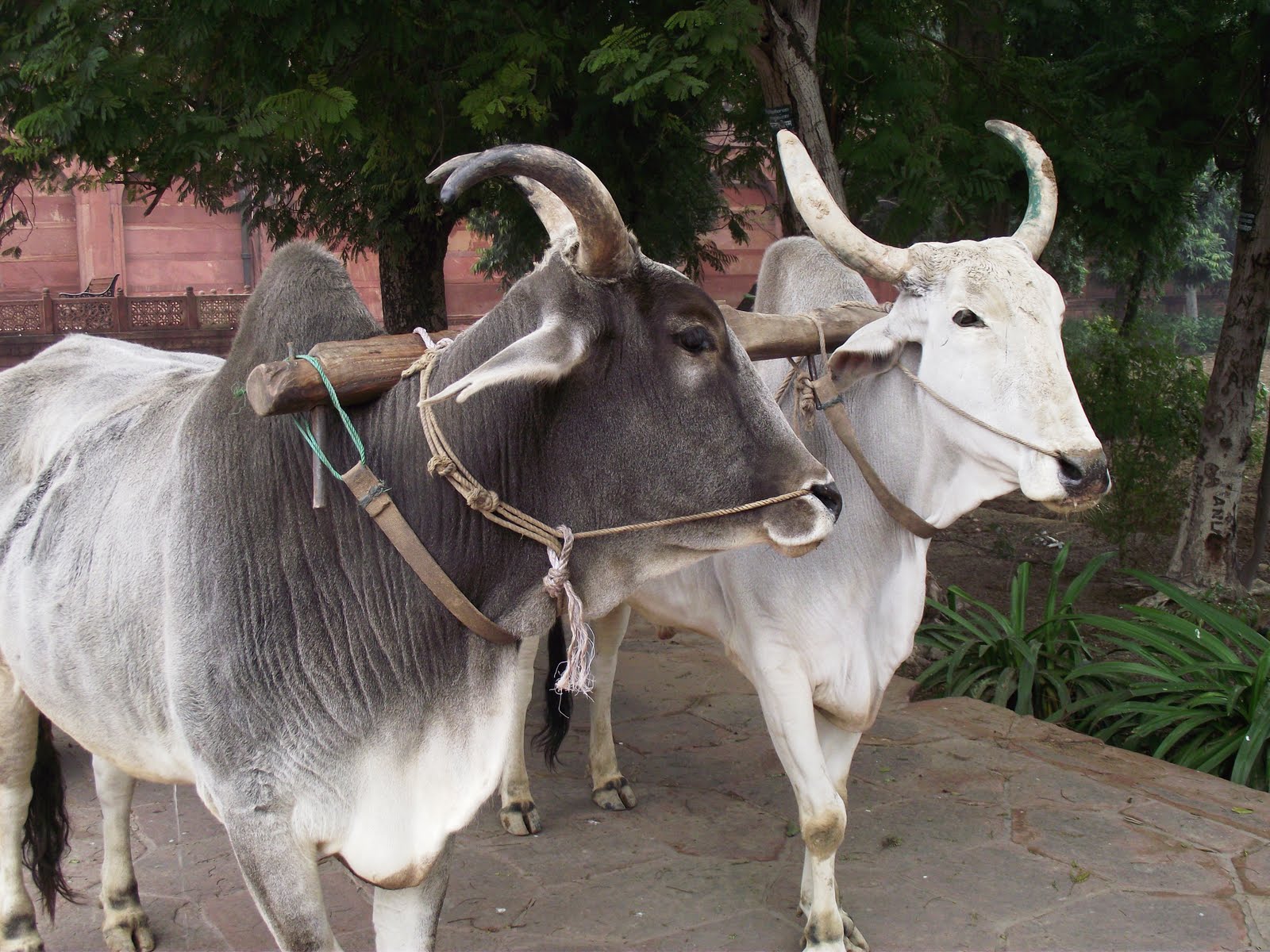
And finally, some of the awesome beasties we met during our excursion.


Monday, January 24, 2011

A Bird in the Hand

Colorful dimond-shaped paper kites are a common sight in the sky in and around Old Delhi. Children fly them from rooftops and parking lots, showing amazing skill in avoiding buildings and trees. But kites are fragile things with short life spans, and stray strings from deceased kites can be found dangling from trees and buildings, threatening to snare unsuspecting passerbyes. During our recent trip to old Delhi (see last post) we got tangled up with a kite of a different sort.

Near the fishnet salesman we ran into some lose nylon threads hanging off a roof-top. While untangling the stray strings from my hair, we noticed that the other end was attached to something above - something large and alive and unhappy - a huge black bird perched on the gutter of the overhead building! As we watched, the bird opened its wings and took off, only to tumble across the road and crash behind a row of autorickshaws.


Our wildlife biologist instincts kicked in, and upon investigation, we found the bird wiped out on the ground entangled in fishing line wrapped around its wings. It was a black kite (Milvus migrans), a ubiquitous bird of prey in the Delhi area. After throwing a shirt over its head to guard against the sharp beak, we cut the restrictive fishing line and placed the bird up on a wall out of the way. "It's dead" insisted the local chai-walla. But almost immediatly the black kite took off and flew away, returning to the sky to join the colorful paper kites dancing over the city.

Old Delhi Afternoon

On a recent afternoon R. and I took the Delhi metro (which is shockingly modern and clean) to the Chandni Chowk station in Old Delhi (which, while neither modern nor clean, is charming). Old Delhi is what was once the walled capitol city of the Mughal empire, containing many beautiful havelis (walled mansions), mosques and gardens. Years of neglect have obscured the splendor, but some havelis and spots of elegant architecture can still be found. Despite the modern crowds and dilapidation, Old Delhi is still the symbolic heart of the greater Delhi metropolis.

In contrast to Old Delhi, New Delhi refers to the city planned by Sir Edwin Lutyens, a British architect, designed to house the government institutions of the British empire in India in the years after the first World War. And South Delhi, where I live, is the modern urban sprawl of the last century.

Old Delhi is an intense maze of narrow alleys, bustling bodies, tiny hole-in-the-wall shops, and (weirdly) goats. Wandering through the streets with festones of dangerous-looking improvised electrical wiring overhead and your hand protectively over your wallet, you never know what you will find around the next corner. As well as residential areas, the old city contains markets concentrating on different types of goods. For instance, there are several streets of shops selling nothing but spices, while another area concentrates on women's clothing. On this trip we stumbled across the used car parts market, full of buildings stuffed full of old tires, fenders, and bits of gears and electronics spilling out of second floor windows.

Despite the lack of any nearby waterway fit for fishing, several net-makers were selling their wares, as well as muchli-wallas (fish sellers) hawking fresh-looking fishes.


A paanwalla sold paan, little packages of areca nut and slaked lime paste wrapped in a betel leaf. Paan takes many forms and can contain tobacco, digestive and breath-freshening ingredients, or candied fruit and fennel seeds. My sister loves the sweet kind, which seems to be more common in Mumbai than Delhi, while I prefer the kind you hold in your cheek like a squirrel as it slowly dissolves, filling your mouth with a minty/liquorish taste.


As the light began to fade in the evening, we found ourselves on the steps of the Jama Masjid, India's largest mosque. And just across the road, we ended the evening with dinner at Karim's, a Mughal eatery, where we filled our craving for meat in this largely vegetarian country with lamb kabobs and spicy chicken. Too full to walk, we wizzed to the nearby Chawri Bazaar metro station in a bicycle rickshaw.

Improvised Baking

In the US, before I moved to India and my new hobby became being deliberately obstructive to pushy people on the Delhi metro, I used to enjoy baking. I had mastered cookies, brownies and other such basic deliciousnesses, and had just moved on to more difficult pies and breads. However all that came to a screeching halt when I moved to a country in which ovens are not considered a basic kitchen accessory.

Yeah, weird, huh? Indians don't use ovens! Tandoor ovens, giant clay ovens in which the temperature commonly reaches 900 degrees F., are used in Mughal cooking for meat dishes and flat breads. But these are massive great objects, often built underground, and are never found in private homes. Baking foods such as leavened loaf bread, cakes, brownies, pies and cookies is virtually unknown. Rich expats in Delhi will sometimes go out of their way to procure an oven, but our poorly furnished apartment in Delhi certainly didn't have one. So I resigned myself to a year-long hiatus from baked goods.

However, on returning to India from a New Years trip to visit my family, I was met with a wonderful surprise. You see, it appears that my boyfriend is actually MacGyver, and in my absence, he made an oven out of a sheet of aluminum siding. Wanna know what he used for tools? One nail, a pair of needle-nose pliers, and a pair of children's safety scissors. Oh yeah, and an empty champagne bottle (for a hammer).


This wonderful device is powered by resting it atop the gas burner, just like a camp oven. It very quickly gets up to temperatures in excess of 250 degrees C. Getto, you are thinking? Au contraire! It works like a dream, and I have personally used it to make an apple pie, peanut butter cookies, buttermilk biscuits, and most recently, double chocolate brownies! Impressed? R. is a renaissance man, no doubt.

Work Time

Contrary to what you all may be thinking based on the content of my posts, I am actually doing some work here. Upon arriving in Delhi in early December, I showed up on the doorstep of my affiliation here in India, The Energy and Resources Institute (TERI), a non-profit organization tackling a variety of environmental policy and research issues including renewable energy, sustainable development, natural resource management and climate change issues. I am now working with TERI's Center for Global Environment Research on two of their ongoing adaptation to climate change projects. In one, a study of coastal vulnerably to climate change in one of India's southern states, I will be working to identify indicators through which to assess the vulnerability of various ecosystem services to climate change-induced changes in sea level and water salinity. In the other, I will be looking at the use of stakeholder involvement in the identification of agricultural adaptation measures to changing water resource availability in north-central India. In the next few weeks I hope to accompany staff members on several field visits in conjunction with these projects.

TERI is housed in the India Habitat Center, a massive and impressive building complex on Lodi Road in South Delhi. This facility also hosts several other NGOs, a hotel, a theater and gallery space, and several restaurants, including my personal favorite, a dingy room in the underground parking garage where a heaping thali (fixed price plate of north-Indian food) can be had for 30 rupies (about 65 cents). The location isn't great, but you can't beat the value!


Tuesday, December 28, 2010

Christmas Trippin'

In Which I Celebrate a Christian Holiday by Visiting the Spiritual Homelands of Buddism and Sihkism.

India is an inclusive and tolerant country, and Indians subscribe to many faiths, including Hinduism, Buddhism, Jainism, Sikhism, Christianity and Islam. Eager to appear fair, the government has declared a huge number of public holidays in an effort to please everyone. Despite the relatively small percentage of Indians that are Christian (about 2%), Christmas is a public holiday in India. Taking advantage of this fact, I took a week around Christmas Day to visit two spots in North India that have great significance to two of India's other major religions, Buddhism and Sikhism.

My first stop was Dharamsala in the state of Himachal Pradesh. This city rose from relative obscurity to international recognision in 1960, when the Dalai Lama, the spiritual leader of Tibetan Buddism, set up his government in exile in the Dharamsala suburb of McLeod Ganj. The Dalai Lama's home is also in McLeod Ganj, as is a sizable and ever-increasing population of Tibetan exiles. I visited a poignant museum near the Dalai Lama's home that condemns the Chinese invasion of Tibet in no uncertain terms. The truth may be slightly more nuanced, however. China invaded Tibet in 1950 (described in China as "the peaceful liberation of Qamdo"), an event that was actually sanctioned by the Panchen Lama (second highest ranking Lama after the Dalai Lama). China's claimed justification was that Tibet was a feudal state, holding portions of the population as agricultural slaves forced to work on land owned by wealthy monasteries and aristocrats. China maintains that the invasion served to break this abusive system and modernize Tibet through amalgamation with China. However there seems to be no doubt that in the years since the invasion, China has perpetuated massive human rights abuses and destruction of Tibet's cultural heritage.

The Dalai Lama was not at home during my visit. So I ate a lot of pizza instead. Dharamsala is a popular destination for Western tourists, and thus a large percentage of the town's economy is geared towards western-style restaurants, souvenir shops and internet cafes. It was a strange contrast to visit a place with a large and needy refugee population and instead find myself surrounded by overpriced cappuccinos.


The Dalai Lama's residence in McLeod Ganj


After a few days I jumped on a rickety bus and traveled 200 km to the south-west to Amritsar, a city in the Punjab right on the border with Pakistan. Amritsar is home to the Golden Temple, or Harmandir Sahib, the spiritual and cultural home of the Sikh religion. I knew next to nothing about Sikhism before visiting Amritsar, but what I learned was very impressive. Sikhism originated in the 15th century partially as a reaction against the prescriptive Hindu caste system. Sikhism is a very inclusive religion; non-Sikhs can fully participate in Sikh ceremonies and activities, and Sikhs pray daily for the well-being of all man-kind. Religious and political freedom for all people is an integral part of the Sikh faith, including equality for women.


An awesome manifestation of the Sikh belief in equality is the Gurdwara, or community kitchen, an integral part of most Sikh temples. Visitors of every religion and socio-economic background are welcome. I visited the Gurdwara at the Golden Temple three times during my stay in Amritsar. As you enter the complex, you are handed a plate, cup and spoon. After making your way into the dining hall, you sit on the floor in long rows with hundreds of other people. Volunteer servers come down the aisles with big caldrons of dal and baskets of bread to fill your plate.

As you can see, the Temple itself is quite spectacular!


The other main attraction of Amritsar is the Wagah border, the only road crossing between India and Pakistan. Every evening before sunset a "lowering of the flags" ceremony takes place on either side of the gates between the national borders. This event is a massive spectacle on both sides, with armed soldiers goose-stepping up and down and large rowdy crowds trying to drown each other out with cheering and shouting.


Despite the pomp and slight ridiculousness of the whole display, the intensity of this nightly event has been considered a barometer of India-Pakistan relations over the years. The ceremony has been recently scaled back, and in 2006, for the first time since the 1947 partition, trucks carrying food goods were allowed across the border. But if there's ever any doubt about feelings between the two countries, just take a look at the border fence. Ouch.

Everest Adventure in Two Parts - Part Do (Two)


Late in the afternoon on our seventh day on the trail we finally dragged ourselves into Gorak Shep, the last settlement on the trail up to the Mt. Everest base camp. Gorak Shep consists of three or four guest houses clustered together in a sandy valley, perhaps the former site of a glacial lake. Unlike most of the other settlements we'd passed through on the way up, this place's only purpose was catering to trekkers. Other villages support agriculture or yak-ranching or craft production, but Gorak Shep is exclusively a base for trekkers and climbers.

At 5,140m (16,864 ft) the air was ever-so thin and cold. This is how it must feel to be very old, we thought. You can never catch your breath and every step is an effort. The landscape was extreme, more so than anything I've seen outside of Antarctica. Nothing but blue sky, black rock, and snow and ice.


After an uncomfortable night in our Gorak Shep guest house, we rose early and headed up the last 3 hours of trail to the base camp itself. Surrounded by high mountains as we were, the valley was in shadow until nearly 10:30am. By that time we were trekking on the Khumbu glacier, a flow of ice descending off Mt. Everest, channeled into a stream between Nuptse and Khumbutse Mountains. About 2/3rds of the climbing trail up Mt. Everest itself is up the Khumbu ice fall, an extremely treacherous landscape of crevasses and shifting ice.

There was not much to mark the site of the base camp itself. There are no permanent buildings there, and outside of the climbing season (March-May) the only man-made structures are patches of flat stones used as tent platforms and a few crudely made stone wind barriers and roofless huts. The main attraction of the base camp is the spectacular views of the Khumbu ice fall, winding up between the mountains to the towering bulk of Mt. Everest, just out of site behind the nearer mountains (see picture above). At 5364m, the base camp is just a bit higher than Gorak Shep.


By the time we started our return journey back to Gorak Shep, the sun had finally made it above the towering mountains and into the valley. Within minutes of the sun hitting it, the dirty ice we were walking on came alive, creaking and cracking and suddenly sprouting rivulets of melt water. It was a little intimidating, and made us remember we were wandering around on a very active glacial flow.

Back at Gorak Shep we ate a quick lunch and then rolled right back out the door for our assent of Kala Pattar, a stony hill right near the village, from the top of which there is a good view of the Mt. Everest summit. Lemme tell you, this hill is *steep*. It would be a pain in the butt at sea-level, let alone at five and a half thousand meters. But our perseverance was rewarded, and as the sun started to set we stood on the top at 5,550m in a stiff wind, treated to an amazing view of the mountain, the glacier and the mountain-ringed valley at the top of the world.

Mt. Everest in the center


Mt. Everest in the center, looking a little smaller than the nearer Mt. Nuptse on the right.

After one more night at Gorak Shep (our eight night on the trail) it was time to walk down-hill for a change. We'd made such good time on the way up, we got a little ambitious and decided to take the long way home. Rather than decending the way we'd come, we only retraced our steps as far as Lobuche and then cut away to the east, following the trail over the Cho La Pass and decending the neihboring valley. So much for going downhill - the Cho La Pass tops out at 5,330m, almost as high as the base camp. Our ninth night was spent at Dzonglha, the crummiest and most expensive guest house yet, and then on the tenth day we tackled the pass. After a sharp slog up switchbacks and a 2-hour boulder scramble, we made it into the glaciated pass. This was probably the sketchiest part of the entire trail, crossing the icy and steep snow pack with nothing but one trekking pole to check my decent if I'd fallen and slid. The trail across the snow was not well marked, and we were worried about straying into areas of unstable ice.


The glacier in the Cho La pass


But we lived, and after slipping and sliding down a scree slope and dodging falling rocks on the far side, we had 2 days to make it back to Lukla to catch my flight to Kathmandu. During the day we rolled down the river valley as the terrain got greener and the air palatably thicker. On nights ten and eleven we slept at Dragnag and Mong. And finally, after an epic 12 hour hike on the twelfth day, we arrived back in Lukla a little foot sore but contented and amazed by our experiences.